Order Flow Imbalance and Short-Term Price Impact
Measuring order flow signals and their predictive power in high-frequency environments.
1.Introduction
Arbitrage remains one of the most robust sources of edge in financial markets. However, capturing meaningful opportunities today requires more than just a solid strategy — it demands a system engineered for speed, precision, and resilience.
In this note, we break down the key components of a modern low-latency arbitrage system, from signal generation to order execution.
2.Strategy Overview
Our strategy focuses on cross-venue price discrepancies in highly liquid instruments. The core idea is simple:
Buy low on one venue, sell high on another — all within microseconds.
We target instruments with:
- High liquidity
- Tight spreads
- Low latency market data
- High fill probability
3.System Design
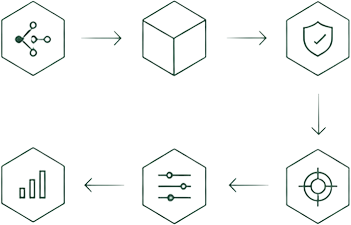
Our system is built with a modular, low-latency architecture.
if (spread > threshold && latency < max_latency) {if (inventory_ok() && risk_ok()) {send_order(buy_venue, sell_venue, size);}}
Key principles:
- Event-driven architecture
- Lock-free data structures
- Co-location with exchange matching engines
- Deterministic processing paths
Execution quality is the ultimate edge multiplier.
4.Execution Considerations
Execution is where most strategies fail. We optimize for:
- Smart order routing
- Queue position awareness
- Partial fill handling
- Adaptive order sizing
Execution quality is the ultimate edge multiplier.
5.Performance & Results
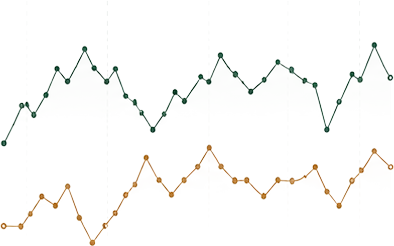
Backtested over 6 months across multiple instruments.

6.Conclusion
Low-latency arbitrage is a technology problem as much as it is a trading problem. Success comes from building robust systems, not just good ideas.
At Vero, we build infrastructure that empowers strategies to perform at their best — in any market condition.